On Pedro Parámo
Ghosts and Capital

I am a man: little do I last
and the night is enormous.
But I look up:
the stars write.
Unknowing I understand:
I too am written,
and at this very moment
someone spells me out.
Brotherhood, Octavio Paz.
Pedro Parámo is the sole and seminal novel of one Juan Rulfo, a relatively obscure writer of Mexican origin. It follows a young man, Juan Preciado, who arrives in the town of Comala in search of his father. He does this at the bequest of his dying mother, albeit with some reservations. Juan finds that the town is empty, haunted, and confused. He never escapes the village and dies the first night he is there, frightened to death by the town’s ghosts. Parámo, this tiny novel, is credited with originating the genre of Magical Realism. Gabriel García Márquez cites the book as the chief inspiration for 100 Years of Solitude, and in the foreword of the edition that I own, he claims to have memorised it cover-to-cover.
The novel does not end with Preciado’s death. Rather, we find ourselves in the soil with him, buried, and here the narrative breaks down entirely. Instead of a natural progression of scenes that might elucidate how Comala came to be forsaken, we hear the muted whispers of its residents, glimpses of their lives, some of which are quite irrelevant. But it is only by sifting through these whispers that a picture of what happened to Comala begins to emerge, albeit fractured.
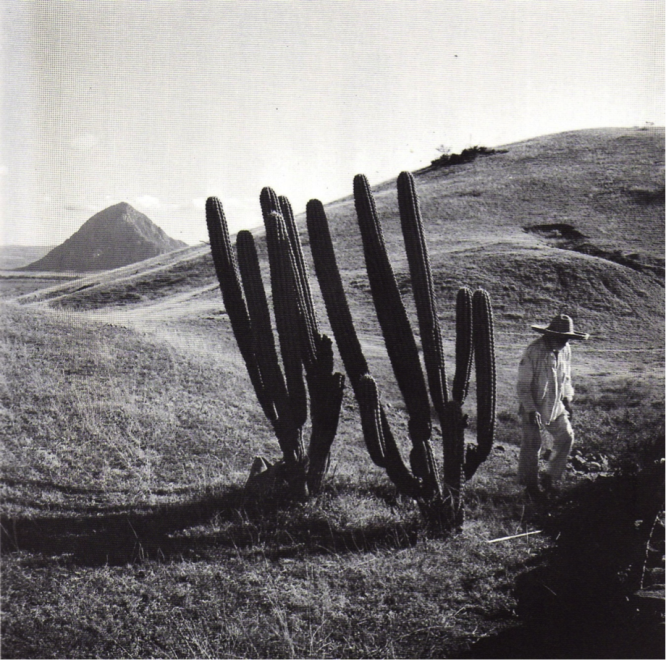
Don Lucas, Comala’s Patron, dies at a wedding. His position is inherited by the titular Pedro Parámo, his son. Pedro is suspicious, and for wont of an assassin massacres every guest that attended the wedding. He proves a schematic and brutal ruler, taking advantage of Comala’s women and extracting an onerous tax from its subsistence farmers. Later, his only son, Miquel, who is as entitled and evil as his father, is thrown from his horse and perishes. The village priest, a Father Rentería, initially refuses to grant the boy absolution, having heard of the rapes he has committed. However, he is bribed to do so. When Father Rentería seeks absolution from a neighbouring priest, he is refused. God turns away from Comala. Pedro kills a mailman, Abundio, after the latter kills Pedro’s cook, Damiana. This is the general character of events in the novel, sporadic and desultory. The only grace in Pedro’s life, the only thing that softens him, is his love for Susana San Juan. However, Susana does not want Pedro and only marries him after she is tricked, after her wary father is murdered. But she descends into madness, subject to the belief that her first husband is still alive. His ghost may have visited her. Eventually, she dies, and Pedro in his grief allows the fields around Comala to lie fallow, and everyone starves to death.
None of this is obvious and even less of it is essential. I have aggregated those passages from the text that allow a kind of narrative to emerge, but the fact of the matter is that the structure of the text and the episodes we are afforded elide neat narrativization. Rulfo, having originated this style, is very careful to refrain from exposition, whether it be about the characterisation of Comala’s inhabitants or whatever their story might mean. This appears to be the point. In his essay A Metaphor for the End of the World, Julio Ortega suggests the following:
In Pedro Paramo the elements that constitute the enigma or the indecipherable are finally identifiable in the codes, as we have seen; yet the enigma is never unravelled. There is neither sufficient reason nor a total regime of meaning that would allow the reader to resolve the dilemmas. Once it has lost its foundation, the world has no way of beginning over again, and it ends itself, closing off any possibility of continuity. This "world upside down" is, certainly, a historical reflection, and its radical hyperbole transforms it into an allegory of those codes that we believe articulate social existence.
To attenuate this: Parámo is a reflection, albeit hazy, of the historical and ideological isolation that had characterised Mexican and broader Latin American history up until at least the point at which it was written, that being 1955. In much of the Latin American literary tradition, according to its logic — and this can be identified in the work of writers as diverse as the aforementioned Marquez, in Julio Cortázar, Roberto Bolaño, Mario Vargas Llosa, Clarice Lispector, Ivan Ângelo, and Lêvo Ivo (Brazilians in particular seem to intuit this). According to their logic, death is a thing that happens to people rather than as a consequence of them. Which is to say that there is a lack of agency in Latin American history, and so its literature. Subjected, as they have been and as they often are today, to colonialism, genocide, extractive capitalism, and an endless collapse of regime upon regime upon regime, there is no room to suppose, as say in the French tradition (which is rife with self-made men, as in Maupassant’s Bel-Ami or Dumas’ The Count of Monte Cristo), that one is anything but a victim of circumstance.
As such, within the framework of Pedro Parámo, this idea that Rulfo has originated, there cannot be an obvious narrative. Because a narrative presupposes a moral universe whereby the actions of some individual -in this case Juan Preciado- affects a change to that universe over the course of a circumscribed period of time, and this is impossible. The average peasant in Parámo is stuck in Limbo: they cannot search for some confabulated significance or meaning because the moment they do they will die. Rather, they must await the next regime, the next ghost, the next bayonet.
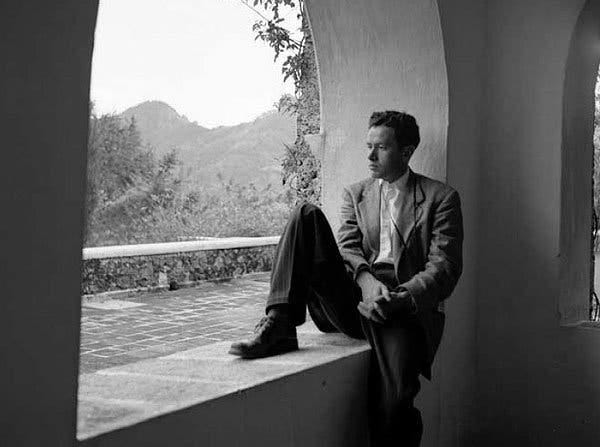
There is much disagreement about whether Pedro Parámo actually constitutes a work of Magical Realism, on account of the tendency within the genre for a given supernatural element to be subtle and understated, whereas this is a book of phantoms. Though it is amorphous in all other respects, this at least is a given. But it is my view that, rather than a descriptive component of the book, a type of content if you will, the supernatural is instead a thematic component. The supernatural serves to make the extraordinary mundane, and the mundane extraordinary, and by whit of this definition Rulfo certainly qualifies. It is also, perhaps, why the genre has proved fruitful in other postcolonial contexts, as in the works of the Nigerian Ben Okri, or more recently in The Seven Moons of Maali Almeida by the Sri Lankan Shehan Karunatilaka.
Because these are all places rich with folklore. Mexico, Nigeria, Sri Lanka. That there are ghosts here is not a striking observation. But that those ghosts are, like us, subject to the whims of capital and its fluid forms, well that is a different matter, an extraordinary matter.
⁂