
Laundromat, Queensland
A review of Jack Norman's debut collection, Sleep Capricorn

In ‘Critic’/’Reader’, George Steiner states that the only real distinction between the eponymous reader and critic is that the latter explicates the distance from which they evaluate the text. In my parlance, they vectorize their reception, and it is within the notation of this vector that criticism occurs. Steiner held many strange views and is most famous in my imagination for his theory that the Holocaust was perhaps just punishment cast upon the Jewish people for the Promethean crime of granting Europeans sapience, but I digress. Taking Steiner at his word, it behoves this critic to notate the exact circumstances in which I received Jack Norman’s debut collection, Sleep Capricorn. This was, by and large, within a laundromat.
Winter has arrived and cast its long shadow over Melbourne. At 5:00 PM, when the workday is done and I descend my office tower, the sun is already fallen beneath the veil of the western suburbs. And it is cold, not as cold as what I considered home, but cold enough that to hang laundry on my rental’s Hill’s Hoist is a sort of death sentence for the articles involved. My cat fouled a bedsheet, and it has sagged along the line for three weeks. I own a limited supply of dress shirts and, like most men, suffer a permanent shortage of socks and underwear. So, I spend a lot of time in the laundromat, and this has proven something of a retreat given my household is often busy, often noisy, too often to read consistently.
Of the eight stories within Sleep Capricorn, five were read while situated before the dryer where my clothes churned and churned. This has created a sort of psychic connection between the laundromat and Norman’s book, his Queensland, and now whenever I go there, I find myself thinking about men, Townsville (one of the two parts of Queensland that I have visited), my father, and my creeping mortality. I find myself thinking of domesticity. There is never a cold day in Norman’s Queensland, but there are chores upon chores upon chores. Chores and small arguments and familial anxieties and children to discipline and thumbs to be greened. This field, the domestic, was historically cornered by feminist writers, women generally, because that had long been their charge. But I suppose —and this is another aside— that this genre has been left homeless of recent by the throngs of young women that have chosen their careers over wifedom, and their attendant literature is about the same envies and the same fears as men. It would be gauche to be a young woman and write about the dishes.
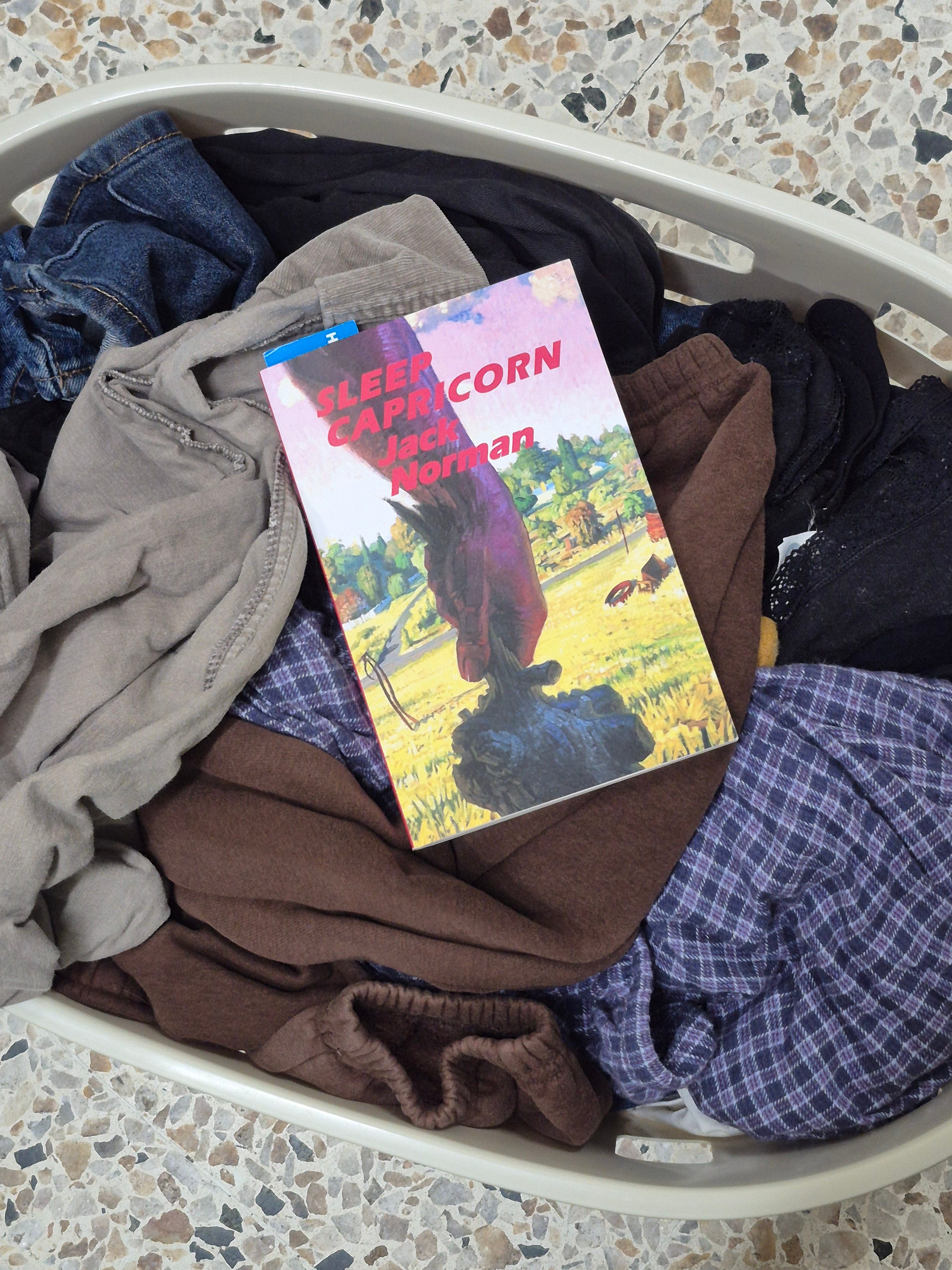
Every story within this collection, with the probable exception of Townsville, begins within the home. Even Townsville ends within the home, but we won’t get ahead of ourselves. It is not that men have not written about these things, or that they are usually incapable of it, but Norman’s domestic contains within itself a breadth and specificity that I have rarely encountered. It is contained within the scenery, the Sega Mega Drive and the CD guitar lessons and the cabinet full of liquor and the Honda CT100 motorcycle and the garden shed and the cathode ray tube television and the interminable copy of Gravity’s Rainbow; and it is contained within the persons that manipulate that scenery, the obsessive (but not compulsive) father and the beleaguered mother and the certain son and the rabble from the river. These examples are taken from the collection’s first story, Beg Love, Beg Boredom. Norman paints a picture. That story is about a man recounting the lifelong idiosyncrasies of his dying father, his strange mental arithmetic and the sometimes quite dire ways in which it manifested within his, the narrator’s, childhood household. A particular theme that I am not sure I have encountered before is the manner in which our fathers (and it is usually our fathers) tend to obsess over and apologise for the wrong things. The narrator’s father is apologetic that he very nearly failed to sire his son, so absorbed was he by the Sega Sports World Series Baseball game, that his wife had to drag him to the bedroom for the purposes of consummation. Really, there are other things the father ought be apologetic for, but the narrator is reconciled with the fact that he is not about to see them, not on his deathbed.
And more than once, under circumstances I thought of as strange, he apologised to me for his behaviour that evening: for putting my life at risk, as he saw it, as though he had any notion of me at the time. It was in his nature, as I say—and more than anything, our natures have the right to be what they are.
I believe the editor of Beg Love, Beg Boredom was Bonfire Book’s Lucas Smith1. If it was his advice to place this story at the fore of the book, it is the smartest decision he made as editor, which is not at all backhanded. The story martials the collection’s themes, establishes the limpid rhythm of Norman’s prose, and could be subject to a much deeper analysis, only that we have another seven stories to consider. Suffice to say, by the time I had finished reading Beg Love, Beg Boredom, my laundry cycle had concluded for a period of eight minutes. I hadn’t noticed, as I was crying. Just a little bit.
In this and other respects, hell within the aforementioned passage, Sleep Capricorn is about men. Every perspective character is male, and I would not say that this is merely incidental to Norman’s own perspective. Murakami was recently, effectively, lampooned by The Guardian upon the breaking news that his next novel was to be told from the perspective of a woman. That such a criticism can be levelled is due to Murakami’s broad themes, that they are missing ‘half of the conversation’. Maybe that’s true, but it would be a superfluous observation held against this book. I would not reduce the collection’s theme to men or say, to men within the domestic; there are other themes that amass as the stories elapse, and we will get to them. But it is obvious that Norman is attempting to articulate what a man is about, and what his relation is to his wife, his parents, his children, and to the body politic at large. You could call this an exploration of masculinity, only that the term is such a fetid, bloated thing within modern discourse that it would prejudice the collection to suggest as much2.
So, what do we mean? I suspect that some readers will regard the theme of ‘men’ as either superficial, obvious, or stock. It is not new territory, broadly construed. Some of the most famous and popular novels of the past fifteen years have been predicated on the exploration of masculinity. Hanya Yanagihara’s A Little Life; David Szalay’s All That Man Is; Ben Lerner’s The Topeka School; Ocean Vuong’s On Earth We’re Briefly Gorgeous, and; Douglas Stuart’s Young Mungo. Male friendship, hidden traumas, the homosocial and homosexual, the place of aggression, and its ‘intersection’ with various social forces like religion, race, and class. They are fundamentally negative about what masculinity is, how it is formed and transmitted between men, supposing it is via violence or shame or socioeconomic circumstance. Often these books will be lauded as piercing or revelatory portraits, important books, books that change one’s conceptualisation of what it means to be a man. But they are rarely read by men, and certainly not by the men that are so often depicted. In all of the above examples —sans, possibly, All That Is Man, which I’m the least familiar with— the men depicted derive from what would be called disadvantaged backgrounds. Disabled black men, the urban fringe of Kansas, a Vietnamese American refugee, working class Glaswegians. If you took the apparent lessons of these works and transmitted them to such classes of men, that their sense of self is wrong, do you think that they would receive such critical assertions well? Do you think they would, so to speak, change their ways? Would they be moved by Ocean Vuong? If you are a man, and you become sensitive to this portrayal, this habit in award-seeking literature, it becomes absolutely appalling to witness the laudation of these works. The notion that, no matter the man’s circumstances, his manner of behaving is in some way faulty. By way of synecdoche, Jessa Crispin’s searing review of The Topeka School captures the dialectic of these novels quite well:
The [The Topeka School] itself is a coming of age story about a young teenage boy trying to surmount his “toxic masculinity” and become a full person. Lerner alternates chapters with fictionalized versions of his own parents, who discuss the difficulties in raising a child in the violent, macho culture of red state Kansas. Before long the novel reveals itself: It’s not a book set in Kansas, but against it. It is not a book that a Kansan would want to read, it is a book for New Yorkers who want to think they understand the red states.
Comparatively, Norman does not fall victim to this trap when discussing masculinity. He is not afraid of it, nor the politics it may represent. Rather, my initial and sustained impression was that Sleep Capricorn is the most humane portrait of men that I have read in probable years. It felt, there in the laundromat, breeze pressing the open doorway, that I was having a conversation with another man about our shared world. Norman does not at any point, so far as I can discern, dismiss the values and expectations of the characters he writes about. He does not condescend to say that this or that belief is predicated on a malformed notion downstream of intergenerational trauma, as though men are incapable of examining themselves and their habits. He does not qualify, not really. Often, it takes the form of aphorisms as in the previously mentioned passage from Beg Love, Beg Boredom. The following story, The Lifetime Member, with an often wry and tragic humour, also affords us this observation. Lionel Duck is a dying retiree that is made a lifetime member of his local cricket club. His children and heretofore distant wife encircle his Mackay home, perhaps unsuccessfully hiding this surprise. Upon being informed that he and the extended family occupying his home will be attending the Harrup Park Cricket Club for dinner, Duck considers the following:
A nice affair, Lionel thought, something they can take home with them and remember they’d attended whenever they start to feel as though they could have done more in those last few months. People liked to pretend they felt guilty about things. Even his own mother had often said in that regretful tone she could affect (seated at their old table; tacky marble pattern chipped away) how much she wished they had visited her brother before he had died… but her brother had only lived in Kuttabul an hour down the way, and Lionel knew that the reason they had not gone to see him was because he told long, resentful stories and his kitchen floor was made of concrete and he only served bore water from the tap that whined loudly, and they had all preferred that he die through the telephone without a fuss.
It is my own supposition (and the reader is free to disagree with this) that a comparable passage in the aforementioned, popular novels would be problematised for its lack of feeling, for its coldness, that Lionel should be ashamed of the distance that he has allowed to elapse between his family and his uncle, and ashamed of his dismissal of guilt. But it is a pragmatic observation, and Norman means what he says, does not allow the plastic implications of this or other terminology to override the explicit meaning of his words, as is the case in so much modern literature.

To round off the book’s preoccupation with maleness, it is most abundant and aphoristic in the collection’s penultimate story, which is also its most rhetorical, the appropriately named Happy Wife, Happy Life. It is probably the least narratively cohesive because of this rhetorical structure and jumps around the course of the narrator’s relationship with his wife. Thus it would do justice to the preceding point to simply quote some of the most strident language contained within:
It goes something like: excitement, sudden passion, sex—generally, if it is the real thing, it only takes a day or two to fall in love, but she would never admit it, so you don’t either—bliss, you may consider running away together, and then like that she can turn on you, sex, fear, sex, then anger, she has sensed how serious you are, she knows you mean to carry her off, it is a primitive instinct, she has been mistreated before, and you had better be lonely enough, patient, and willing to endure…
“Why can’t we just say sorry and go to bed?” I asked.
“Because I’m acting like a monster and I don’t know how to forgive myself.”
“So say sorry and I’ll forgive you.”
I’m afraid that went on for some time. Kostantin Levin and Kitty Shcherbatskaya after they married. You must forgive the nature of women; they are trained to mistrust any love that is not their mother’s. It helps to remember that if you are any sort of man, you will be a sexist, and if you are sexist, then you will know it is your responsibility to look after her and mind her feelings. Men take something they have called “integrity” and decided most things in life are better left unsaid.
The invective of this story is assisted greatly by the form of the prose, these exhortations by way of the use of ‘you’. It is littered with them, and each exhortation rings true, in its way. It would be hard to determine which of these remarks, in Happy Wife and elsewhere, constitute Norman’s truest feelings, because though every character here is, yes, a white guy north of Rockhampton, there is a huge diversity spanning their internal worlds, the parameters by which they evaluate the given situation. No, they do not ring true because they constitute a thesis, but because they constitute a series of real thoughts among men. This is, in my humble view, the foundation of Norman’s realism. Certainly, they are more real than the miraculous, ideologically subaltern thoughts that fill those novels I’ve previously mentioned.
However, this theme is not the long and short of Sleep Capricorn. From the first to the last there is also the theme of mortality, and so we must return to Lionel Duck. He takes it in good humour, the function wherein he is inducted into the cricket club, but the feeling is bittersweet. The function reminds Duck that he has spent so much of his life mesmerised by his boyhood that he didn’t pay proper attention to the spiralling lives contingent upon his own. Take the following passage, during and after his son, Douglas, has delivered a sterling speech:
For all the time he had wasted living in the vivid memory of Proserpine and in his boyhood dream, he had not wasted nearly enough on the other lives he had lived, and it required a tremendous effort on his part not to collapse beneath those old scenes that Douglas spoke of and coaxed now all together from the back of his mind (street carnival in Clermont, toy trucks assembled on the shag carpet, cyclone in Townsville, late night birth of his youngest daughter).
The present rarely felt as real to him as it did then. (…) For all its imagined significance, the moment had been committed to the past already. A feeling of pride lingered for his son, but just as he resolved to hold onto it for as long as he could, he was disturbed by the fact that it would slip away at its own pace whether he had noticed it or not. The illusion of Lionel Duck was fading with each moment… insight and fatigue worked hand in hand. He had no reason left to want.
And indeed, he does forget that moment by the close of the story, drifting to sleep while Eliza drives them home. Duck’s trouble rings true, this sense of malapportioned time. A failure to be present, swept up by one’s own daydreaming. It echoes the father’s misplaced apologetics in Beg Love. Five of the eight stories within the collection have an explicit relation to death and mortality. The first three of the collection detail a man that is dying; Hughenden involves a funeral; and there is another death in the back half of the collection that I won’t reveal for reasons of propriety3. The theme is ultimately relational, between sons and fathers, fathers and daughters, grandmothers and their ménage, even the relationship between neighbours comes alive in No Adonis Has Come to Stay! and Townsville. But like everyone else, and though there are passages where Norman invokes a God that is especially frightening in a desacralized Australian context, he cannot apply aphorism to what it may mean to die. The narrator of Beg Love cannot reconcile with his father’s peculiarities, and in The Lifetime Member and Give Me The Final Say, the collection’s third story, this urgent mortality affects an insuperable, flattening distance between the two stories’ perspective characters and everyone around them, be they friends, families, or strangers. The effect of this is especially striking in Final Say, which I did not appreciate on a first reading. Bart is as familiar with the neighbour whose name he can’t recall as he is with his own daughter, his own wife! The impressive effect of these stories, here, comes down to a matter of prose, or of style.
I’ve occasionally remarked that one of the better ways to understand a writer is to read a set of their short stories, should they be available, prior to reading one of their novels. This was how I determined that I disliked Camus, by reading Exile and the Kingdom, its only saving grace a woman that cheats on her husband with the sky4, but I digress. The primary value it affords the prospective reader, the prospective fan, what we’d call a ‘net endorser’ in my penurious profession, is a cross section of the writer’s diction. No two stories are the same, the voice varies, but there are habits that connote the writer’s presence across them. For example, in the prior quoted passages alone we can pick out the ellipses, which serves the purpose of distinguishing a shift in implied voice. Generally, Norman utilises the full breadth of punctuation at his disposal, italicisation and bolding among them. Polysyndeton is used sparingly, but his paragraphs are information dense and become denser as the stories elapse (more good work by the editor). Take the following passage, picked more or less at random, from No Adonis Has Come to Stay!:
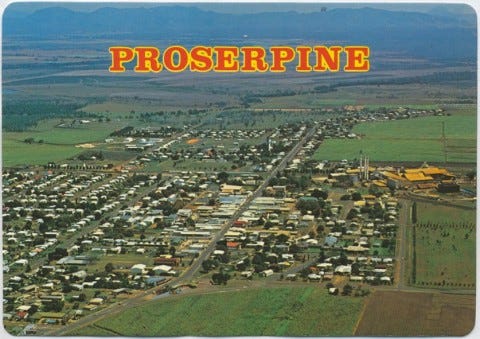
Paul dressed out of the laundry hamper and made his way into town on foot. Nothing was far enough to drive in Proserpine. The open fields between its handful of neighbourhoods connected the footpath behind his house to a small network of park lanes and grass alley cul-de-sacs. It was not unusual for men and women of all ages to cut across the school grounds of a morning, straight across the oval, direct onto Renwick Road. But Paul was rarely in that same hurry to be on time. He was tardy by nature. It was an essential advantage he had against the symptoms of middle age that frightened over the thought of written warnings and delays in schedule. Take one, take another. The way a young man would. He had to head those symptoms off as often as he could. There at every pedestrian crossing or bin put out for collection, waiting to seize upon him the moment his thoughts bent towards styles of conventional wisdom or sensibility! As with the yellow ooze of infection, or the bright blister of any rash, the primary symptom of his imminent middle age appeared to Paul as the gradual process of giving in he had observed before in others, which he now felt he was undergoing, informed by a taste on the back of his spirit, slowing down, giving in, going—in his mind—somewhere far away, unromantic, pedestrian, where one became concerned with the state of petty things and other people’s lives. A new kind of lethargy weighed heavily in the muscle of his back. His posture was difficult to maintain. He sat more often than he stood. And his thighs felt thick and meaty and he had to hoist them with each step. But more serious was the sudden willingness he had developed to forfeit the once precious notions of personal fantasy, passion, and elemental good cheer that pulled at either end of the self’s compass, which seemed to have exchanged themselves for the dispassionate form of wisdom that relied heavily on retrospect and the knowledge that afforded him of the past. An evolutionary function meant to equip him with the tools to look back now more often than forward. He felt his perspective shift higher, elevated above the hours of the day that passed below at a much faster rate than when he swam through them. Everything passed. Embittered feelings did not latch to his heart in the same way anymore. Days at a time could go by if he let them. It was the general teaching of an early vipassana class he had abandoned after the exercises failed to resonate, except it did not bestow the same feelings of liberation the woman had spoken about, and he could not say why. No desire to take control of himself—or despair at his inability to do so—could linger long enough to test him anymore. Time moved at such a swift pace; he thought of yesterday’s troubles, now gone, and in a way mourned for them, but he felt quite sure that life would basically come and go like this from now on. 5
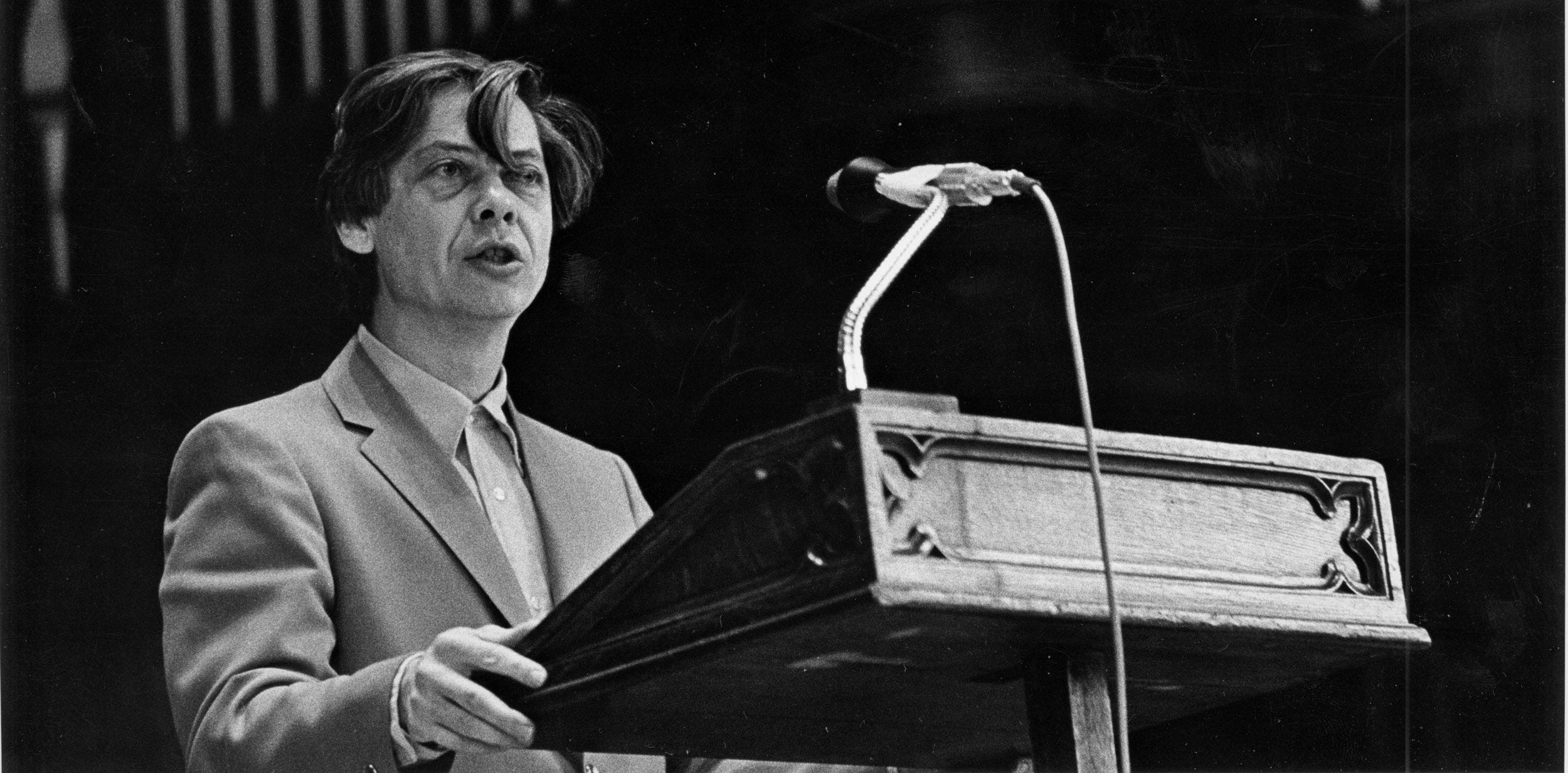
The educated Australian reader —all nine of them— could probably infer that Sleep Capricorn will owe some kind of a debt to David Malouf without having to read the book, it is in the air, and becomes apparent whenever Norman describes a landscape, and not just for physical resemblance. There is a certain animist spirit in the landscape that is not present elsewhere in his prose. However, the above passage recalls William H. Gass, and my understanding is that this formed a key stylistic influence upon Norman6. The above is a technical form of prose, as in ‘of a technique’. Gass’ injunction was that the act of prose was to form a style with a specificity and idiosyncrasy such that the prose itself becomes the subject, rather than the psychological content it tends otherwise to represent7. His alleged view was that “there are no descriptions in fiction, there are only constructions”. Here, Norman employs the hurried conventions of Proserpine’s locals to form a synecdoche for Paul’s fear of middle age, his doomed resistance to it. He then follows with telegraphic sentences, as though Paul’s strategy is faltering, piece by piece, then by way of longer-form anecdote (the vipassana class) confirms that, despite himself, Paul is losing this particular battle. A rising and a falling, a vertiginous arc across the mind’s eye, mine anyway. Norman is able to vectorize his writing, in much the manner I mentioned at the fore of this review, to the ends of his themes with great effect.
But it is not an inhuman exercise. Occasionally, in reading Gass, I found his constructions too alien to sustain my interest, and I would grow weary, though his sheer talent was undeniable. Comparatively, Norman’s writings are necessarily humane, and nowhere else is the marriage of his technique and apparent aims clearer than in the collection’s closing story, Townsville, which takes this arc we’ve identified and applies it to the span of a city. However, I shan’t comment upon it, in part because my reception of this story happened in quite frustrated circumstances. Namely, every time I went to my local laundromat, I turned off the television, which otherwise played reruns of the most leaden American home improvement shows one could imagine. Doorframes painted purple, wicker chairs in bathrooms, a room dedicated entirely to the shoes of houseguests, I could not read while they molested another home. Alas, either the laundromat’s security cameras actually work, or I had neglected to turn the television back on before I left at some prior date, because upon attending the laundromat with a view of finishing this collection I found that he had taped over the television’s buttons and written ‘DO NOT TOUCH’ on the tape. Moreover, he had increased its volume to what I must assume was its maximum, because it was louder than several of the machines turning at once. She hung a garland on the interior side of a front door. I was apoplectic, dismayed, frightened, delirious. Nonetheless, I elected to stand outside the laundromat, next to a sonorous traffic tunnel, in the dead of a cold, cold night, and read the story in question. Only to say that it warmed me.
I’ve been castigated by friends and enemies for suggesting that the blurb or quotations along a book’s cover can be utilised to the ends of determining a reader’s expectations prior to engaging the text within. Nonetheless, insofar as this is an attempt to illustrate the inner and outer lives of the proverbial ‘Middle Australians’, it is the most apt and expressive piece of writing I’ve read on the subject. Indeed, it was a relief to.
⁂
1 Please correct me if this is mistaken.
2 As an aside, something in the water up north seems to predispose their writers to this subject matter. I would mention Nicholas John Turner’s let the boy’s play, which also circles masculinity, albeit in a very oblique, distressing manner.
3 It would be fair to say that I’ve spoiled The Lifetime Member. That story aside, I should want people that have not yet purchased and read the book to do so, and that shan’t be achieved by dissecting every single narrative.
4 La Femme adultère.
5 I am sincere when I say that it was picked at random, but I do think this passage integrates both the pressing themes of masculinity and mortality of which I’ve written.
6 Serpent eats its tail: I read In the Heart of the Heart of the Country, prior to listening to the Getting Lit Podcast’s interview of Norman where Gass is mentioned, which was prior to reading Sleep Capricorn. This is a perfidious influence because I then kept seeing Gass in Norman, though it may well be the case that it is not so.
7 Vidal also makes this distinction.
This is phenomenal criticism, and even better writing qua writing. I am very impressed. Congratulations.